Window Replacement in San Bernardino, CA
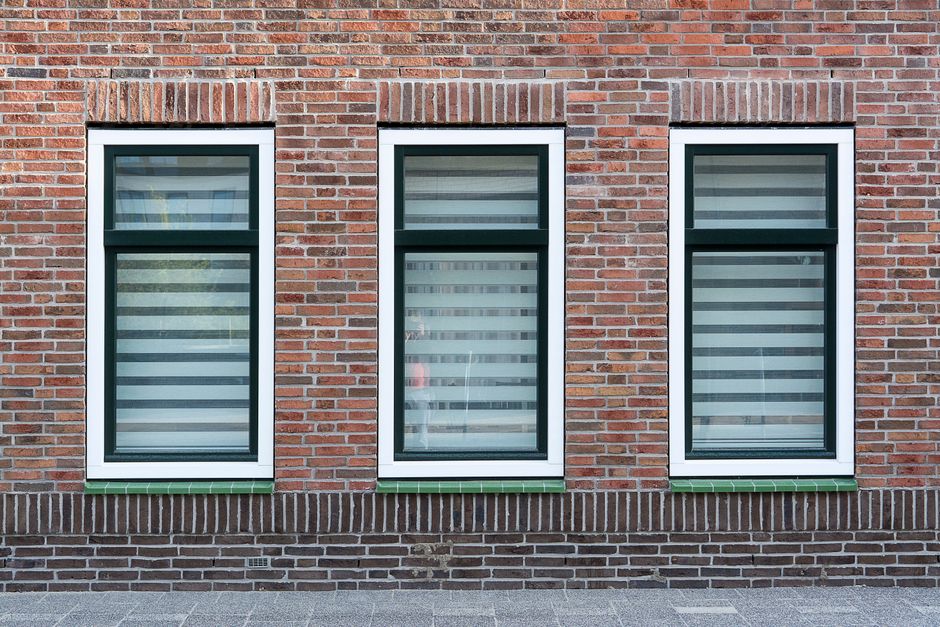
Plain answers about window replacement in San Bernardino, CA, from prep and frame materials to install methods, timing around heat and wind, and common glass problems, written to help homeowners ask better questions.
What We Cover
- When Is the Best Time of Year to Replace Windows Here How summer heat, Santa Ana winds and occasional winter rain affect scheduling, sealants and comfort during a window job.
- How Do I Compare Window Installer Proposals Fairly The details to look for in written window proposals so you compare the same product, glass and install method across installers.
- Why Is There Fog Between the Panes of My Dual Pane Windows What causes moisture inside sealed glass, how big daily temperature swings stress seals, and what repair or replacement involves.
- How Should I Prepare My Home for Window Installation Day What to move, disconnect and protect before installers arrive so the job goes faster and your floors, walls and belongings stay clean.
- Should I Choose Retrofit or Full Frame Replacement on a Stucco House How insert and full frame window installs differ on stucco homes, and what each method means for flashing, glass area and wall patching.
- Which Window Frame Material Holds Up Best in Inland Heat How vinyl, fiberglass, aluminum, wood and composite frames react to strong sun and hot summers common in San Bernardino.
Window Replacement in San Bernardino, CA
Window replacement in San Bernardino is mainly a job of managing heat, sun and dust, and the crew plans each install around those three. Summers across San Bernardino County run long, afternoon sun is hard on glass and frames, and temperatures swing widely between day and night. Frames expand and contract daily, so the fit and sealant must allow for movement.
The same climate applies near California State University, San Bernardino, and out toward Muscoy, Loma Linda and Redlands, though house age varies block to block. Each job starts by measuring the opening, checking that it is square, and noting the condition of the wall around it.
Dust and Sun
Santa Ana winds push dust into every gap, so tight seals matter as much as glass type. Dust gets into tracks, weep holes and worn weatherstripping, so the crew keeps drainage paths open and runs a continuous sealant bead around the perimeter.
Strong sun is the other half. Low emissivity coatings on dual pane glass cut heat gain, with the tradeoff of a slight tint. Dark frames absorb more heat and move more.
Stucco and Route 66 Homes
Stucco decides how a replacement window gets fitted. A retrofit unit sets inside the existing frame and leaves the stucco alone, while full frame replacement removes the old frame and means cutting and patching stucco. Retrofit is cleaner, and full frame allows repair of the rough opening.
Older homes along the U.S. Route 66 corridor may still have original single pane aluminum or wood windows. Aluminum passes heat straight through, and old wood swells or rots, so frame condition drives the method.
Foothills and Fault Country
Glass type and secure anchoring are fair topics to raise here. The region lies near the San Andreas Fault, so frames should be fastened into solid framing, not held by sealant alone. Foothill streets toward the Arrowhead Springs Hotel area sit closer to brush, so tempered or laminated glass is worth discussing.
Guides
The guides on this site cover preparing for installation day, frame materials for inland heat, retrofit versus full frame on stucco, and the best time of year to replace. They also explain fog between dual pane panes and how to compare installer proposals fairly.
Latest Guides
Laminated or Tempered Glass for Window Replacement in San Bernardino Earthquake Country
2026-10-24
Laminated glass is the better choice when the goal is a window that stays closed after it breaks in an earthquake, and tempered glass is the better choice when heat resistance matters most. For many San Bernardino homes the strongest answer is a dual pane unit that uses both. The reasoning comes down to what each type does in the seconds after it fails.
What Happens When Each Glass Breaks

Tempered glass is ordinary glass that has been heated and cooled rapidly. That process makes it several times stronger than standard annealed glass of the same thickness, and it changes how the pane fails. When tempered glass breaks, the whole pane lets go at once and falls apart into small, blunt cubes. The opening is then completely empty.
Laminated glass is two or more lites bonded to a plastic interlayer, usually PVB. When it breaks, it cracks in a spiderweb pattern, but the fragments stay stuck to the interlayer and the pane generally stays in the frame. The window looks ruined, yet it still works as a barrier.
Neither one is unbreakable. Tempered glass is not shatterproof, and laminated glass is not earthquake proof. The difference is the aftermath: tempered drops granules and leaves a hole, while laminated stays put as a cracked but closed barrier.
Why Glass Breaks in a Quake
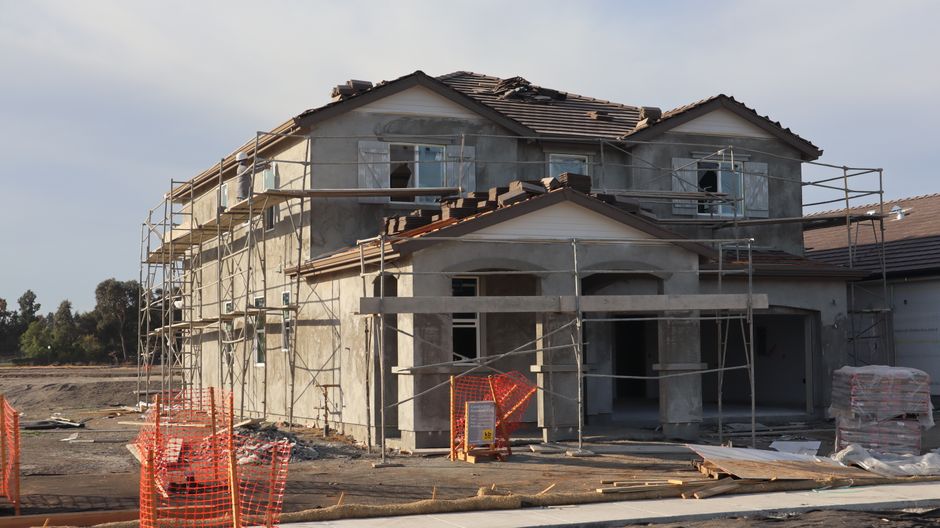
Glass in a house rarely breaks because something hits it. During shaking, the wall and window frame rack out of square, and the frame squeezes the glass. Once the stress passes what the pane can take, it cracks.
That is why San Bernardino homeowners should think about the second half of the event. Falling granules and chunks of tempered glass can still cut and injure anyone standing nearby, and an empty opening lets in wind, dust and weather. A cracked laminated pane keeps most of that out.
Why San Bernardino Raises the Stakes
The San Andreas Fault runs along the base of the San Bernardino Mountains on the north side of the city. Homes in the northern foothill areas, such as those near California State University, San Bernardino and in Verdemont, sit close to the fault trace. For those homes, keeping glass from falling inward or outward deserves extra weight in the decision.
Wind adds another reason. Santa Ana winds funnel through the Cajon Pass and hit the city hard, throwing branches and debris at windows. A broken laminated pane usually keeps wind, dust and embers out. A broken tempered pane leaves an open hole until it is boarded.
Start by Checking What You Already Have
Many older San Bernardino homes still have original single pane annealed glass, often in aluminum sliders. Annealed glass breaks into long, sharp shards and is the most dangerous glass to have during shaking. Replacing it comes first, before any debate about tempered versus laminated.
You can identify what is in a window without tools:
- Tempered glass normally carries a permanent etched mark, often called a bug, in one corner.
- Laminated glass shows a thin plastic line when you look at the edge of the pane.
- Glass with no mark and no visible interlayer should be treated as annealed until proven otherwise.
Do not assume a dual pane window is safety glass automatically. A dual pane unit can be made of two annealed lites.
Where Safety Glass Matters Most
Put safety glass first in the hazardous spots: doors, sidelites, tub and shower enclosures, large panes that sit low near the floor, and glass near stairs. Requirements vary by location in the house, so ask the installer what applies to each opening instead of guessing.
The Case for Laminated Glass
Beyond holding together in a quake, laminated glass has several practical advantages in this area.
- Break-in resistance. Laminated glass is significantly harder to break through, which deters smash and grab entry. Tempered glass is strong in the center of the pane, but a sharp blow near the edge can shatter it instantly. Laminated glass is not bulletproof and is not automatically impact rated.
- Noise reduction. It reduces noise better than a single monolithic lite of similar thickness, which helps for homes near the freeway corridors or the rail lines that run through the city and up the Cajon Pass.
- UV protection. The standard PVB interlayer blocks most UV light, which slows fading of floors and furniture behind sunny south and west facing windows in the Inland Empire heat.
The Case for Tempered Glass
Tempered glass earns its place in wildfire exposed foothill neighborhoods like Verdemont. It resists heat-induced cracking much better than annealed glass, and dual pane units with at least one tempered lite are a standard recommendation near the wildland edge.
The caution runs the other way for laminated glass in that setting. The interlayer can soften under intense heat, so ask the installer how a laminated lite would perform in that specific assembly before committing.
The Combination Many Homes Use
Insulated windows do not have to use one glass type throughout. A common upgrade is a dual pane unit with a tempered outer lite and a laminated inner lite. The outside gets strength and heat resistance, and the inside gets fragment retention, so broken glass is held on the room side rather than dropping toward the people in it.
Ask the installer to put the exact makeup of each lite in writing, including which one is on the interior.
Installation Details That Decide the Outcome
The glass type is only half the story. How the glass sits in the frame matters just as much.
- Glazing bite and clearance. Ask about setting blocks, edge clearance and adequate glazing bite. Glass with no room to move cracks sooner when the frame racks, and laminated glass with too little bite can pull out of the frame as a sheet.
- Weight. Laminated glass is heavier. Have the installer confirm that sash balances, hinges and rollers on operable windows and sliders are rated for the added weight, or the hardware will wear early.
- Edge sealing. Laminated edges must stay sealed. Long exposure to water, or contact with incompatible sealants, can cause cloudy delamination that starts at the edges. Ask that the installer use sealants rated compatible with the interlayer.
- Exact sizing. Tempered glass cannot be cut, drilled or edged after tempering. Every pane has to be ordered to exact size, so a measuring error means reordering, not trimming.
Bedroom Escape Windows
Windows meant for emergency escape need a sash that opens easily. Do not plan on breaking glass to get out. Because laminated glass is hard to break through and holds together when cracked, keep this in mind before putting laminated glass in an escape window, and confirm that the operating hardware still works smoothly with the heavier lite.
Care and Quirks of Each Type
Tempered glass can rarely break on its own with no impact, usually from a tiny inclusion in the glass or an old edge chip. If you find a chipped edge on a tempered pane, especially on a slider, plan to replace it.
Do not scrape tempered glass with a razor blade. Fine debris from the tempering process can drag across the surface and leave permanent scratches. Use non-abrasive cleaners and soft pads.
After a Noticeable Quake
Walk the house and check each pane. Look for:
- Cracks, including hairline ones in the corners
- Chipped edges
- Fogging between the panes of dual pane units, a sign the seal failed
- Sashes that now bind or will not lock
A cracked laminated pane still holds, but it needs replacement because it no longer has its full strength.
If Replacement Has to Wait
For existing annealed windows that cannot be replaced yet, professionally applied safety film is a stopgap. It holds shards together, and it works best when the film is anchored to the frame. It is not equivalent to factory laminated glass, and it should be treated as a temporary measure rather than a finished fix.
A Practical Way to Decide
Work through the choice in this order:
- Replace any annealed glass in doors, low panes, bathrooms and stair areas first.
- For homes close to the fault trace in the northern foothills, lean toward laminated glass on at least the interior lite.
- For homes at the wildland edge, ask for a tempered lite in the assembly and have the installer explain how any laminated lite will behave near heat.
- For noise, break-in concerns or sun fading, laminated glass adds value on top of its quake performance.
- Confirm hardware weight ratings, glazing bite and sealant compatibility before the order is placed.
A good installer will answer each of these questions plainly. If the answers are vague, that is a sign to keep asking before any glass is cut or ordered.
Window Replacement in San Bernardino: Can It Keep Wildfire Smoke and Embers Out?
2026-10-24
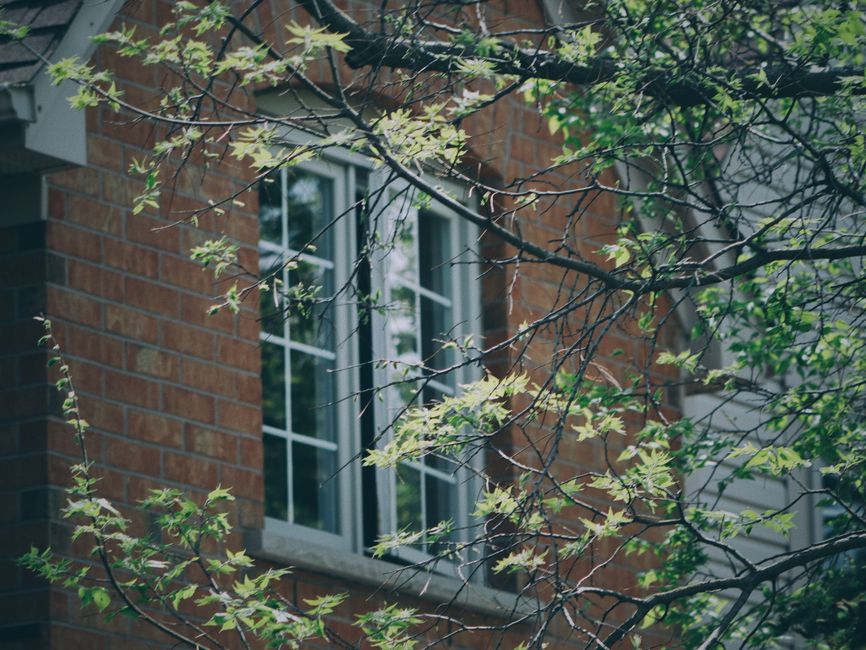
Replacement windows can help keep wildfire smoke and embers out of a San Bernardino home, but only when the glass is tempered, the frame holds its shape under heat, and the installation seals the gap around the frame. They do not make a house fireproof or ember proof. Windows are one part of hardening a home, alongside vents, roof, gutters, and defensible space.
Why the glass is the first thing to check

Most window failures in a wildfire start with the glass. Radiant heat from burning brush or a nearby structure can crack ordinary annealed glass. Once a pane falls out, embers and flames have an open path into the house.
Tempered glass handles heat far longer than annealed glass. For a home near brush, dual pane units with at least the outer pane tempered are the starting point, and tempering both panes adds more margin. Dual pane alone is not the answer. Two annealed panes can still crack and fall out.
Low-E coatings and tinted glass do not change this. They help with everyday sun and comfort, but they do not help glass survive radiant heat.
How to tell what you have now
Look in one corner of each pane for a small etched or sandblasted mark. Tempered glass carries one. If there is no mark, the pane is usually annealed, and that window moves to the top of the replacement list.
Frame material under heat
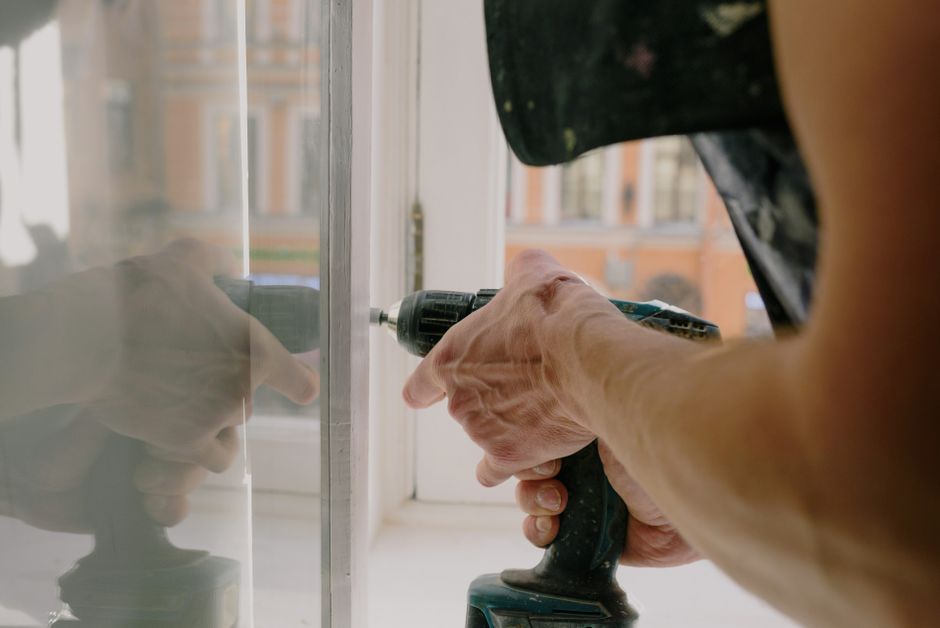
A strong pane still needs a frame that holds it. Standard vinyl can soften and sag in heat, which may let the glass unit drop out of the frame. Aluminum, fiberglass, and metal clad wood frames keep their shape better. Not every vinyl window performs the same as a metal or fiberglass one, so do not treat them as equal.
If vinyl is the choice, ask about metal reinforced frames and for documentation of fire testing.
Ask for paperwork, not slogans
A sales sheet that says "fire safe" proves nothing. Ask the installer for written product documentation showing the unit was tested for wildfire or ember exposure. If the paperwork does not exist, treat the claim as marketing.
Smoke mostly sneaks in around the window
Smoke is a different problem from embers. Much of the smoke that gets in comes through gaps around the frame, not through the glass. A premium window set badly in a leaky opening will still let smoke through.
Correct installation seals the joint between the new frame and the rough opening with low expansion foam or backer rod and sealant on the inside, plus exterior sealant and flashing outside. That layered seal is what keeps fine smoke from being pulled around the unit.
Retrofit inserts or full frame replacement
Many older San Bernardino tract homes have aluminum slider windows. A retrofit insert leaves the old frame in place and fits a new window inside it. That works if the gap between the old and new frames is fully sealed. A full frame replacement lets the installer inspect and repair the rough opening, and it is worth considering where the old frame is bent or the stucco joint around it is cracked.
Leave the weep holes alone
Slider and aluminum frames have weep holes along the bottom that drain water. Do not caulk them shut. Blocked weep holes cause leaks and rot, and they do nothing meaningful against embers. Some products use baffled weep covers that limit wind driven air without stopping drainage, which is a better answer than a bead of caulk.
Operating style changes how tight a window stays
Casement and awning windows press the sash into a compression seal when locked, so they usually leak less air than sliders and single hung windows. Sliders and single hung units rely on brush style pile weatherstrip, which wears and leaks over time.
For rooms where smoke tightness matters most, such as bedrooms, a casement or awning style is a sensible pick. Whatever the style, a window only blocks smoke and embers when it is closed and latched. During any red flag or smoke event, close every window, slider, and skylight and lock them so the sash pulls tight against its seal.
What San Bernardino's wind and terrain change
Santa Ana winds come down through Cajon Pass and across north San Bernardino from the northeast. That wind pressure on the windward walls forces smoke through every small leak and drives embers against glass and frames. Check seals and weatherstripping first on windows facing north and east.
Foothill neighborhoods such as Verdemont, and the area around California State University, San Bernardino, sit close to brush covered slopes. In homes like these, put the strongest glass and frame upgrades on the walls and skylights that face the slopes, and phase the rest of the house in afterward if the project has to be staged.
Skylights
Skylights take direct ember and heat exposure. Plastic dome skylights near brush should be replaced with units that use tempered glass. Keep leaves and debris off the roof around them.
Screens and what sits under the window
Screens catch embers when windows are open and help protect the glass. Choose metal mesh. Fiberglass screens melt and burn.
What sits under a window matters as much as the window itself. Bark mulch, dry shrubs, wood furniture, and wood fences below or beside a window can flare up and put direct flame on the glass. Keep the strip directly under windows clear, using gravel, pavers, or bare soil.
Slider tracks and deep sills also collect leaves, pine needles, and dust that embers can ignite right against the frame. Vacuum tracks and clear sills regularly, especially in late summer and fall.
Yearly upkeep before fire season
Hot dry summers and strong sun dry out and crack rubber and foam seals. Each year before fire season, press along the weatherstripping on every window. It should be soft and continuous. Replace any that is flattened, brittle, or missing.
A quick leak test
On a windy day, close and lock the windows. Slowly move a stick of incense or a lit candle around the sash and frame edges, keeping it away from curtains and blinds. Smoke that wavers or gets pulled in marks the spot where a seal or installation gap needs work.
The leaks that new windows cannot fix
Windows are not the main way embers get into a home. Attic and foundation vents, roof edges, and debris filled gutters are usually bigger entry points, so a window project should not come at the expense of those. Smoke also gets in through doors, vents, ducts, attics, and other gaps, so new windows will not keep all of it out.
A few household habits matter just as much:
- Evaporative coolers. Many older Inland Empire homes still use them, and they pull large volumes of outdoor air inside. Shut them off during smoke events, because even the tightest windows cannot help if the cooler is drawing smoke in.
- Window air conditioners and portable units. Units vented through a window gap bypass the window seal entirely. Seal or remove them, or at least stop them from pulling in outside air when smoke is present.
- Indoor air cleaning. Tight windows slow smoke but do not clean the air. Run a portable HEPA air cleaner in the main living or sleeping room. With central air, set it to recirculate and use the highest rated filter the system can handle.
Cleaning up after ash
After a smoke or ash event, rinse ash off glass and frames with plenty of water, then wipe gently. Dry scrubbing drags abrasive ash across the glass and can scratch it and wear away coatings. Wet ash left sitting on frames and seals can degrade them over time.
A practical order of operations
- Check each pane for the tempered mark and flag any window without one.
- Rank the windows by exposure: slope facing walls and skylights first, then north and east walls that take the Santa Ana wind.
- Choose dual pane units with a tempered outer pane at minimum, in a frame that keeps its shape under heat, and get the fire testing documentation in writing.
- Confirm the installer will seal the frame to the opening inside and out, and will leave the weep holes working.
- Fit metal mesh screens, clear the ground under the windows, and set up a HEPA air cleaner.
Done in that order, replacement windows give a San Bernardino home a real improvement against both smoke and embers, even though they cannot do the whole job alone.
Nearby Service Areas
We also cover window replacement pros in Carlsbad.